
Table of Contents
- What Is Straw Marquetry?
- Why Is Straw Marquetry Returning to the Luxury Market?
- How Is Straw Marquetry Different From Wood Veneer?
- Where Is Straw Marquetry Used?
- What Quality Factors Should B2B Buyers Check?
- How Is Straw Marquetry Produced?
- What Are the Sourcing Challenges and Opportunities?
- Is Straw Marquetry a Sustainable Decorative Material?
- How Can Luxury Brands Position Straw Marquetry?
- FAQ
What Is Straw Marquetry?
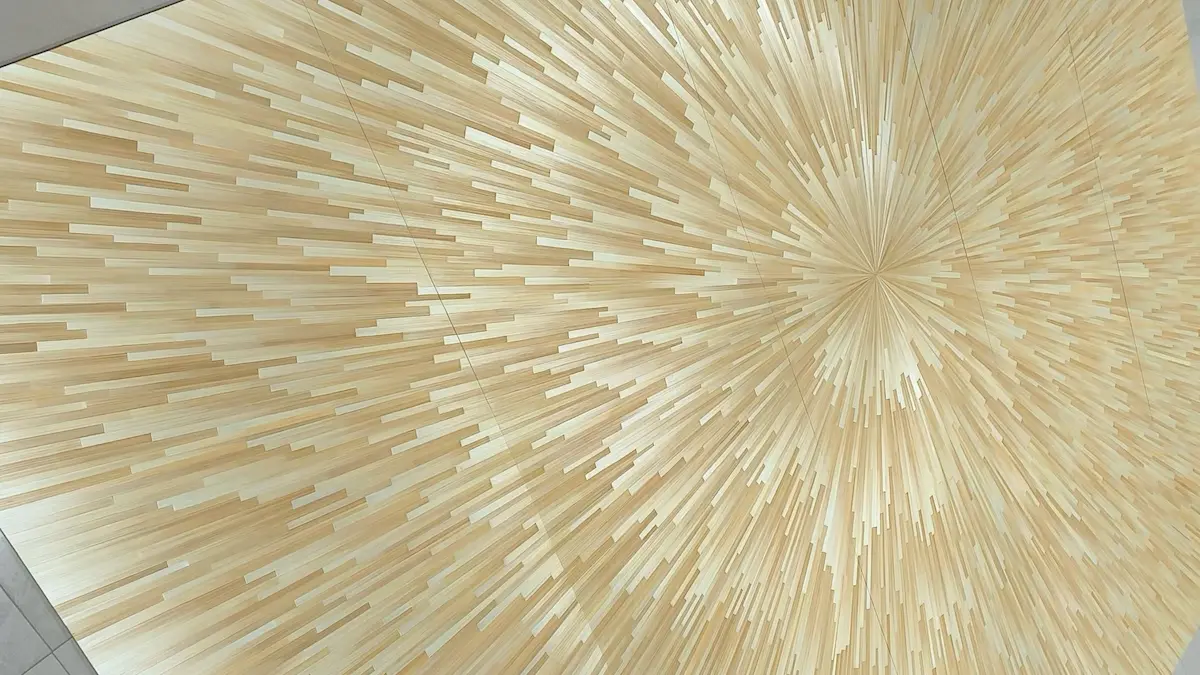
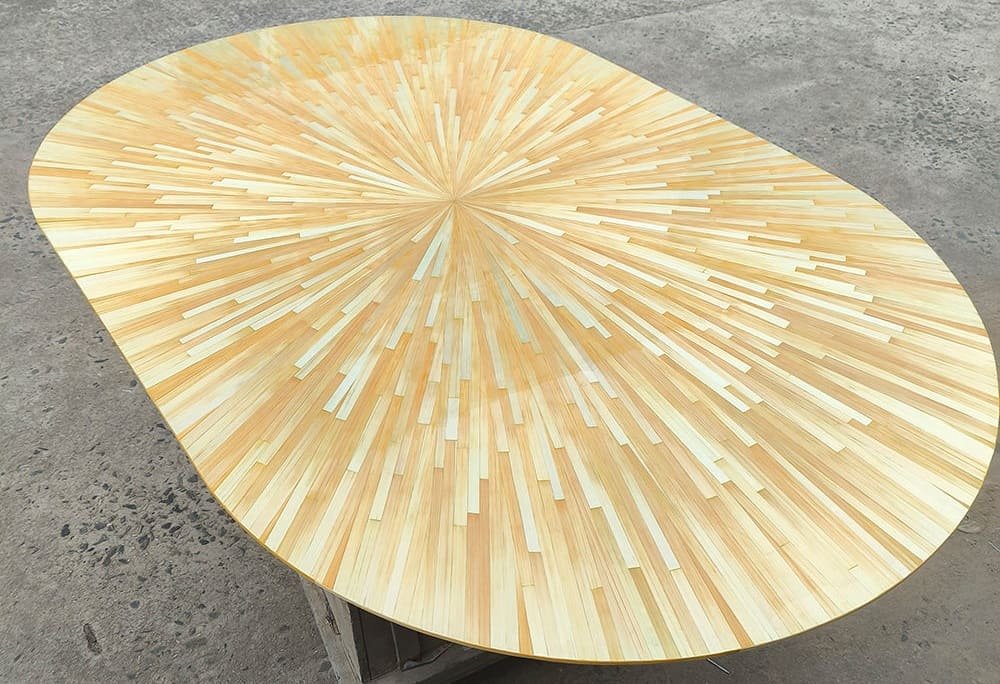
Straw marquetry is a decorative craft in which straw fibers are split, flattened, and carefully arranged on a substrate to form patterns, textures, and reflective visual effects. Unlike printed decorative materials, straw marquetry has a living surface character. As light moves across the panel, the material reveals a subtle shimmer and directional texture that makes each composition feel dynamic.
Historically associated with European decorative arts and luxury craftsmanship, straw marquetry is now being rediscovered by furniture designers, boutique interior brands, and architectural product developers seeking premium differentiation. Its appeal lies in the combination of natural materiality and meticulous handwork.
From a B2B perspective, straw marquetry is best understood as a high-value decorative surface rather than a mass-market covering. It is often used on cabinet fronts, wall panels, luxury boxes, tabletops, doors, and statement furniture pieces where visual storytelling matters as much as structural performance.
For companies already working with natural decorative materials, straw marquetry can also complement broader surface categories such as Veneer, especially in high-end custom collections where texture contrast and artisanal detail create added value.
Why Is Straw Marquetry Returning to the Luxury Market?
Luxury buyers are increasingly looking for surfaces that feel rare, tactile, and culturally meaningful. In that context, straw marquetry has several advantages. First, it offers handcrafted differentiation in a market crowded with repetitive synthetic finishes. Second, its visual depth changes with lighting, making it highly suitable for premium interiors where atmosphere matters. Third, it aligns with the broader return to natural materials and craftsmanship in luxury furniture and hospitality design.
Another reason for its return is that many designers now want surfaces that communicate quiet sophistication rather than obvious ornament. Straw marquetry fits this demand well. Its beauty often comes from pattern rhythm, tonal variation, and reflective texture rather than loud color contrast.
Market-wise, this trend also connects to wider premiumization in furniture and interior décor categories: [Insert Authority Link from Statista or Industry Report]. In short, straw marquetry is becoming relevant again because it offers exclusivity that is visible, tactile, and difficult to imitate convincingly through mass production.
How Is Straw Marquetry Different From Wood Veneer?
Although both straw marquetry and wood veneer belong to the world of decorative natural surfaces, they serve different aesthetic and commercial purposes. Wood veneer emphasizes grain, species character, and organic warmth. Straw marquetry emphasizes pattern composition, directional reflection, hand-laid detail, and artisanal exclusivity.
In practical terms, wood veneer is usually more scalable for broad furniture programs, while straw marquetry is better suited to feature surfaces, luxury limited editions, hospitality focal points, and statement pieces. Veneer can support larger production runs with consistent visual language, while straw marquetry often commands higher unit value because of its more labor-intensive process.
| Technical Item / Project | Standard / Value |
|---|---|
| Base Material Character | Straw marquetry: flattened straw with reflective directionality; Wood veneer: sliced natural wood grain |
| Visual Effect | Straw marquetry: shimmer, pattern, handcrafted depth; Wood veneer: grain, warmth, species identity |
| Production Scale | Straw marquetry: smaller batch, more handwork; Wood veneer: more scalable for broader furniture lines |
| Typical Use | Straw marquetry: luxury accent panels, statement furniture; Wood veneer: cabinetry, doors, furniture faces, paneling |
| Commercial Positioning | Straw marquetry: artisan premium; Wood veneer: natural premium with wider industrial use |
For buyers comparing decorative options, it is often more useful to see straw marquetry and veneer as complementary rather than competing materials. Many premium collections can successfully combine straw surfaces with wood species-based veneer solutions for contrast in tone and texture.
Where Is Straw Marquetry Used?
Straw marquetry is most effective where design attention is concentrated. It is typically used on visible, touchable, and brand-defining surfaces rather than hidden structural components. In luxury interiors, it functions as both a material and a conversation piece.
Common applications include:
- Luxury cabinet doors and drawer fronts
- Decorative wall panels and inset panels
- Hospitality and boutique hotel furniture
- High-end wardrobes and dressing spaces
- Reception desks and feature joinery
- Jewelry boxes, gift packaging, and collectible cases
- Tabletops, headboards, and screens
Because of its artisanal look, straw marquetry is especially suitable for projects that want to communicate craftsmanship, exclusivity, and sensory richness. Designers often use it in areas with controlled lighting, where its directional sheen can create a strong emotional effect.
What Quality Factors Should B2B Buyers Check?
For B2B sourcing, straw marquetry should be evaluated beyond appearance alone. A panel may look attractive in a sample photo but still fail commercial expectations if alignment, substrate performance, finishing consistency, or packaging are poorly controlled.
Key quality checkpoints include:
- Pattern precision: alignment must be visually clean, especially in geometric layouts.
- Surface consistency: color transitions should feel intentional, not random or patchy.
- Substrate stability: moisture behavior and flatness matter for furniture integration.
- Edge finishing: panel transitions and corner execution should suit the final application.
- Protective coating: finishing must preserve visual depth without excessive plastic appearance.
- Packaging protection: decorative surfaces need anti-scratch and anti-moisture shipping control.
Where straw marquetry is bonded to wood-based panels, buyers should also review substrate moisture conditions and dimensional stability. In adjacent veneer-based production, moisture benchmarks such as 8–12% are common reference points for natural material control. Dimensional precision also matters in luxury projects, especially where panel-to-panel continuity is expected.
| Technical Item / Project | Standard / Value |
|---|---|
| Visual Pattern Alignment | Clean, repeatable, intentional composition |
| Substrate Moisture Reference | 8–12% where wood-based backing is used |
| Dimensional Tolerance Reference | Project-dependent, fine decorative work may target thickness consistency within ±0.02mm on controlled laminated layers |
| Surface Finish Goal | Protective but visually natural, without masking straw texture |
| Packaging Requirement | Moisture barrier + anti-scratch interleaving + reinforced export carton or crate |
When suppliers discuss manufacturing systems, inspection routines, and documentation discipline, it is also useful to consider process frameworks associated with ISO Standards for quality management.
How Is Straw Marquetry Produced?
The production process combines material preparation, visual planning, hand placement, bonding, pressing, trimming, and finishing. Although exact workflows vary by workshop and product format, the general sequence is relatively consistent.
Typical process steps include:
- Selecting and preparing straw fibers
- Splitting and flattening the straw
- Sorting by color, width, and reflective quality
- Creating a layout pattern or custom design map
- Applying the straw manually to the selected substrate
- Pressing and stabilizing the decorative layer
- Sanding, sealing, and top-finishing the surface
- Final trimming, inspection, and packaging
This production path is one reason straw marquetry remains a premium category. Compared with standard decorative sheets, it requires more visual judgement, more manual precision, and more careful finishing control. That labor intensity is not a weakness; it is a core part of the material’s value proposition.
What Are the Sourcing Challenges and Opportunities?
For importers and furniture brands, sourcing straw marquetry successfully requires realistic planning. This is not a purely standardized commodity category, so expectations around sampling, lead time, pattern approval, and finish consistency should be aligned early.
Main sourcing challenges include:
- Natural variation in handcrafted materials
- Longer development time for custom patterns
- Need for stronger approval control on color and layout
- Higher packaging sensitivity due to decorative surfaces
- Balancing artisanal value with repeatable production needs
At the same time, these challenges create commercial opportunity. Brands that manage development carefully can launch products with stronger storytelling, higher margins, and clearer differentiation from standard decorative furniture. For many luxury buyers, uniqueness is not a problem to solve; it is the reason to buy.
If straw marquetry is being developed alongside wood-based decorative programs, buyers may also benefit from working with partners familiar with veneer supply, panel handling, and export finishing standards. Related categories such as decorative veneer often share practical concerns around moisture control, substrate matching, and protected packaging.
Is Straw Marquetry a Sustainable Decorative Material?
Straw marquetry can contribute to a more sustainability-oriented material story, especially when it is responsibly sourced, carefully manufactured, and used in durable, long-life products. As an agricultural byproduct-based decorative medium, straw can support lower-waste design narratives compared with purely synthetic decorative layers.
However, B2B buyers should approach sustainability carefully and accurately. The most credible positioning comes from discussing practical factors such as renewable material origin, artisanal production, durability, and thoughtful substrate selection rather than relying on vague eco-claims.
Where wood substrates or veneer backings are part of the final construction, buyers may also want to consider certified responsible wood sourcing frameworks such as FSC (Forest Stewardship Council). This is especially relevant when straw marquetry is integrated into hybrid decorative panel programs that include timber-based materials.
Ultimately, the sustainability value of straw marquetry is strongest when it is used in high-quality products designed to last, repair, and remain desirable over time.
How Can Luxury Brands Position Straw Marquetry?
Luxury brands should position straw marquetry not as a substitute for standard decorative material, but as a signature surface. Its commercial strength lies in exclusivity, craft identity, and emotional texture. It works best when connected to a broader brand message around artisanal quality, sensory design, and limited-edition detail.
Strong positioning angles include:
- Handcrafted premium detailing
- Natural material with light-reactive beauty
- Designer customization and pattern storytelling
- Limited edition or boutique production appeal
- High-end hospitality and residential statement applications
From a B2B sales perspective, straw marquetry becomes more persuasive when suppliers provide clear sample boards, finish options, substrate choices, and realistic lead time communication. The goal is not to oversimplify the material. It is to make its premium complexity commercially manageable.
FAQ
Is straw marquetry the same as wood veneer?
No. Straw marquetry uses flattened straw arranged into patterns, while wood veneer uses thin slices of natural wood. Both are decorative natural surfaces, but they create different visual and commercial effects.
Is straw marquetry suitable for mass-market furniture?
Usually it is better suited to premium and luxury applications. Because of its handcrafted nature, it is more often used for feature products, limited editions, and high-value interior elements.
What should importers request from a supplier?
Importers should request sample boards, substrate details, finish specifications, packaging methods, lead times, customization capabilities, and quality control documentation.
Can straw marquetry be combined with veneer?
Yes. It can pair beautifully with wood veneer in luxury furniture and interior design, especially when designers want to create contrast between grain-based warmth and reflective handcrafted texture.
Is straw marquetry sustainable?
It can support a sustainability-oriented material story, especially when used with responsible substrate choices and durable product design. Sustainability claims should always be presented carefully and truthfully.
What are the main risks in sourcing straw marquetry?
The main risks are inconsistent pattern quality, unclear finish expectations, insufficient packaging protection, and unrealistic assumptions about handcrafted repeatability. Early sample approval is critical.
Looking for premium decorative surface materials for luxury furniture and interiors?
Chuanfoo Wood supports custom decorative development, including natural Veneer solutions for furniture brands, importers, and interior manufacturers.
Contact us to discuss surface options, sampling, substrate matching, export packaging, and OEM development for your next premium panel project.