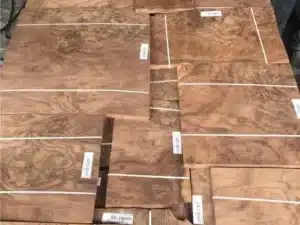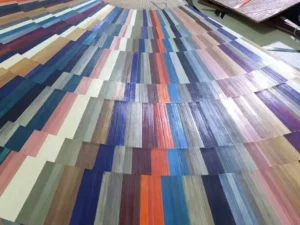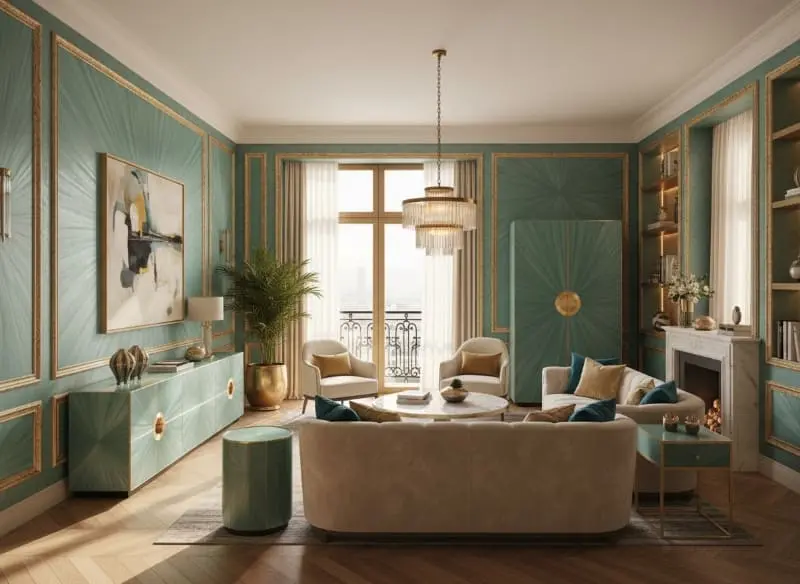
As a decorative veneer manufacturer and supplier, we work with furniture brands, contractors, architects, wholesalers, and interior project buyers looking for premium surface materials that stand out in competitive commercial and residential projects. Straw marquetry veneer is one of the most distinctive options for luxury interiors because it combines handcrafted detail, directional grain effect, and a soft natural sheen that changes under light.
In interior design, straw marquetry veneer is typically used as a feature surface rather than a mass-market finish. It is suitable for furniture, wall panels, cabinet doors, decorative doors, and bespoke joinery. For B2B buyers, the key is not only the appearance, but also how the veneer is built into a panel system, how it performs on different substrates, and how it matches other materials such as oak, walnut, teak, metal, or lacquered finishes.
Table of Contents
- What Is Straw Marquetry Veneer?
- Where to Use Straw Marquetry Veneer in Interiors
- How to Match Straw Marquetry with Other Materials
- How to Specify Straw Marquetry Veneer for Interior Projects
- Panel Types and Technical Specifications
- Common Mistakes to Avoid
- Design Tips for Commercial and Residential Projects
- Project Example
- Straw Marquetry Veneer vs Wood Veneer
- How to Source Custom Straw Marquetry Veneer Panels
- FAQ
- Why Buyers Work With Us
What Is Straw Marquetry Veneer?
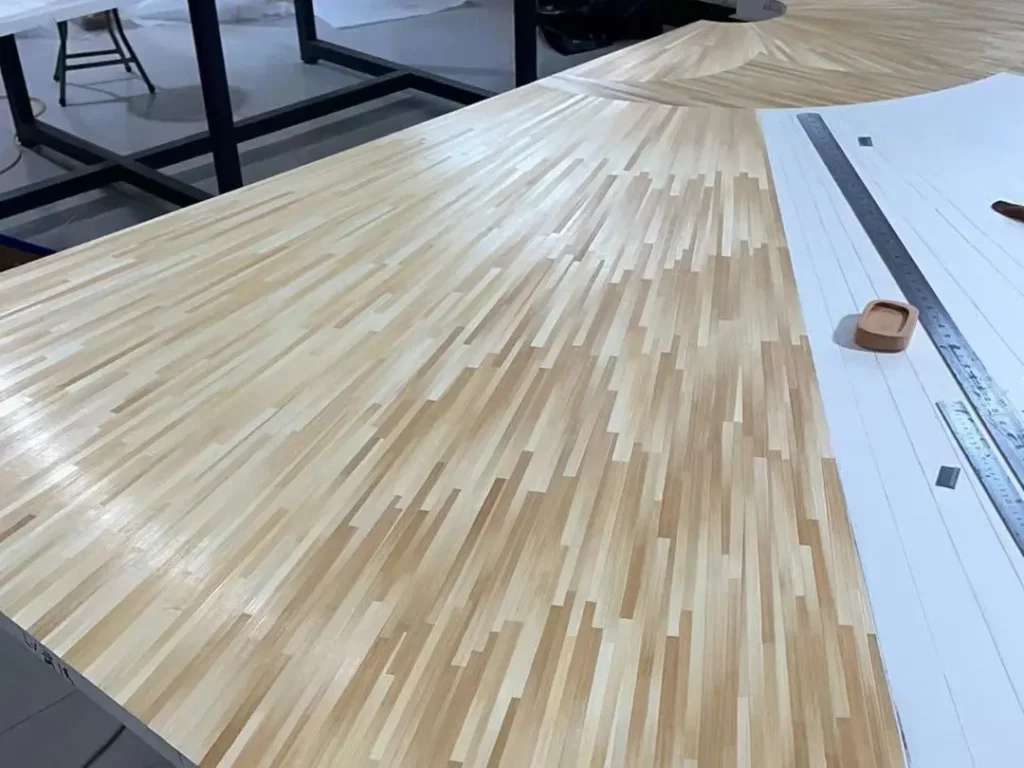
Custom straw marquetry veneer production for furniture and interior panel applications.
Straw marquetry veneer is a decorative surface made by cutting, flattening, and arranging natural straw into patterns before bonding it onto a backing or substrate. The result is a refined veneer-like finish with a reflective, linear appearance. Unlike printed decorative films, straw marquetry has genuine natural variation and handcrafted depth.
Designers choose this material because it creates a luxury effect without relying on heavy ornament. Depending on the pattern layout, it can look minimalist, geometric, Art Deco inspired, or highly bespoke. In many interior projects, straw marquetry veneer is used together with wood veneer panels such as oak, walnut, and teak to create contrast between traditional timber grain and a more radiant handcrafted surface.
From a manufacturing perspective, straw marquetry veneer may be supplied in natural handcrafted form, engineered decorative panel form, or laminated construction depending on application requirements. Buyers should always confirm the final product format before specification.
Where to Use Straw Marquetry Veneer in Interiors
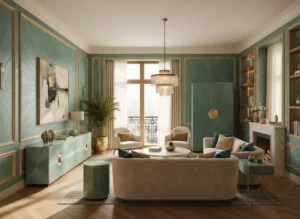
Straw marquetry veneer used for furniture, wall panels, and cabinet door applications.
One of the best ways to use straw marquetry veneer in interior design is to treat it as a focal material. Because it reflects light and shows directional grain, it performs best on visible surfaces where detail can be appreciated.
Furniture
Straw marquetry veneer works well on sideboards, wardrobes, cabinet fronts, table tops, drawer faces, bed back panels, and bespoke reception furniture. It is particularly effective when framed with walnut, oak, or dark lacquer, as these materials help define the patterned surface and improve edge durability.
Wall Panels
For wall panel systems, straw marquetry veneer is often used in hotel lobbies, boutique retail spaces, private villas, and premium residential interiors. Large panels with linear grain direction can make a room feel taller or wider, depending on how the pattern is oriented. Geometric cut layouts can also be used to create feature walls behind reception desks, bed heads, or lounge seating areas.
Doors and Decorative Surfaces
Decorative doors, sliding partitions, wardrobe doors, and inset joinery panels are also suitable applications. In these cases, the veneer should be paired with a stable substrate and finished with an appropriate protective coating. Since doors receive more contact than wall panels, specifying the correct finish is essential for long-term performance.
In general, straw marquetry veneer is best used on statement surfaces rather than every surface in a space. This helps preserve its premium character and avoids visual overload.
How to Match Straw Marquetry with Other Materials
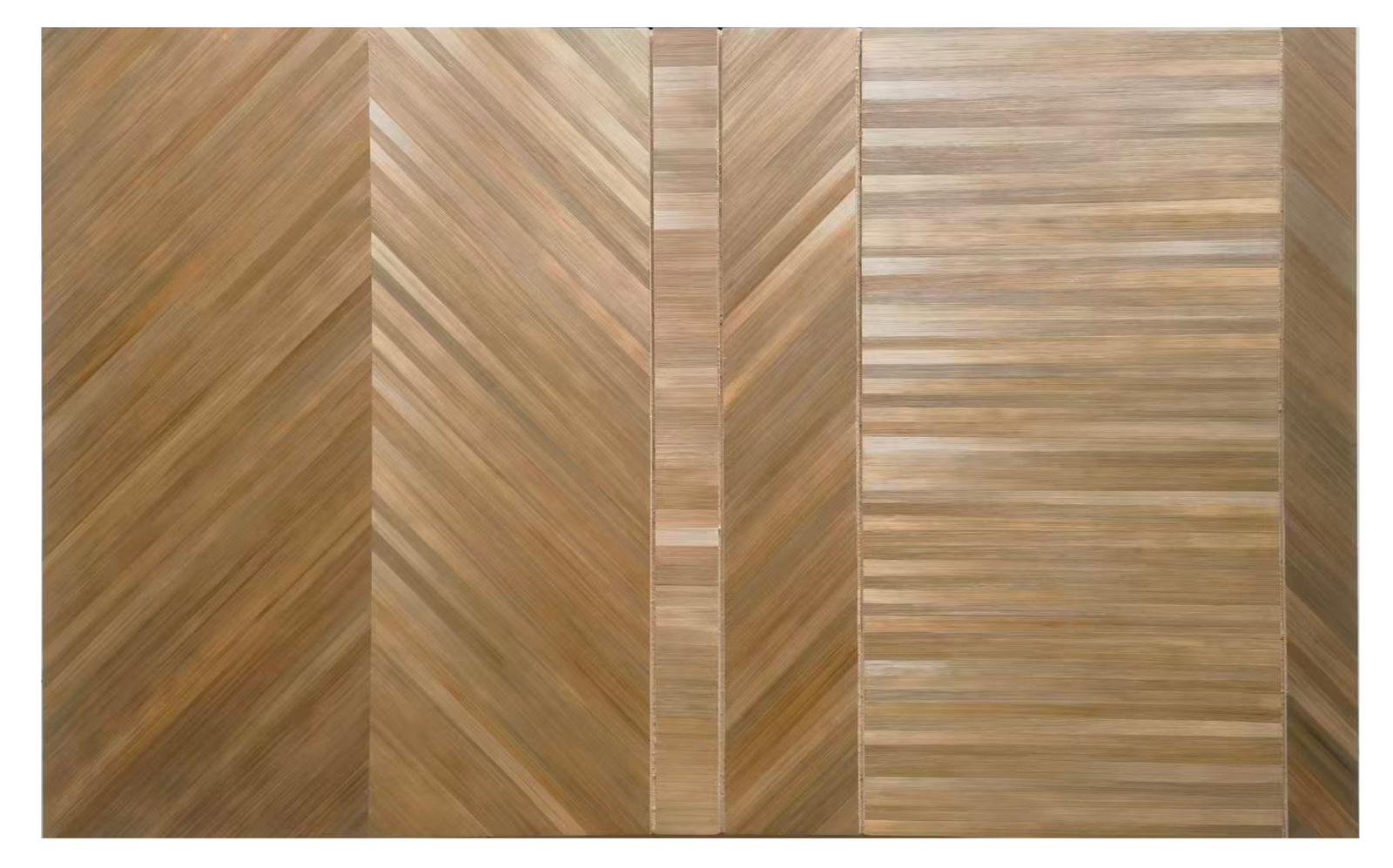
Material matching with straw marquetry veneer, wood veneer, metal, and lacquer finishes.
Successful interior design with straw marquetry veneer depends on material balance. The veneer has a naturally vivid grain effect, so it should be combined with calmer surrounding finishes.
Match with Wood Veneer Species
Oak veneer adds a clean and contemporary look. Walnut veneer brings warmth and luxury, making it one of the most popular pairings. Teak veneer introduces a richer golden tone, especially suitable for hospitality interiors and premium residential projects. By combining straw marquetry with these species, designers can create layered material stories rather than relying on a single decorative texture.
Use Metal and Lacquer Carefully
Brass, bronze, blackened metal, and matte lacquer finishes are often used with straw marquetry. Metal can highlight the handcrafted pattern, while lacquer provides a neutral surrounding frame. For example, a cabinet door may use a straw marquetry center panel, walnut border, and brass handle system.
Consider Light and Color
Lighting is critical because straw marquetry changes appearance depending on angle and intensity. Warm lighting usually enhances its natural glow, while directional lighting can emphasize pattern and cut layout. Designers should test samples on site to evaluate sheen, color balance, and visual impact under actual project lighting conditions.
How to Specify Straw Marquetry Veneer for Interior Projects
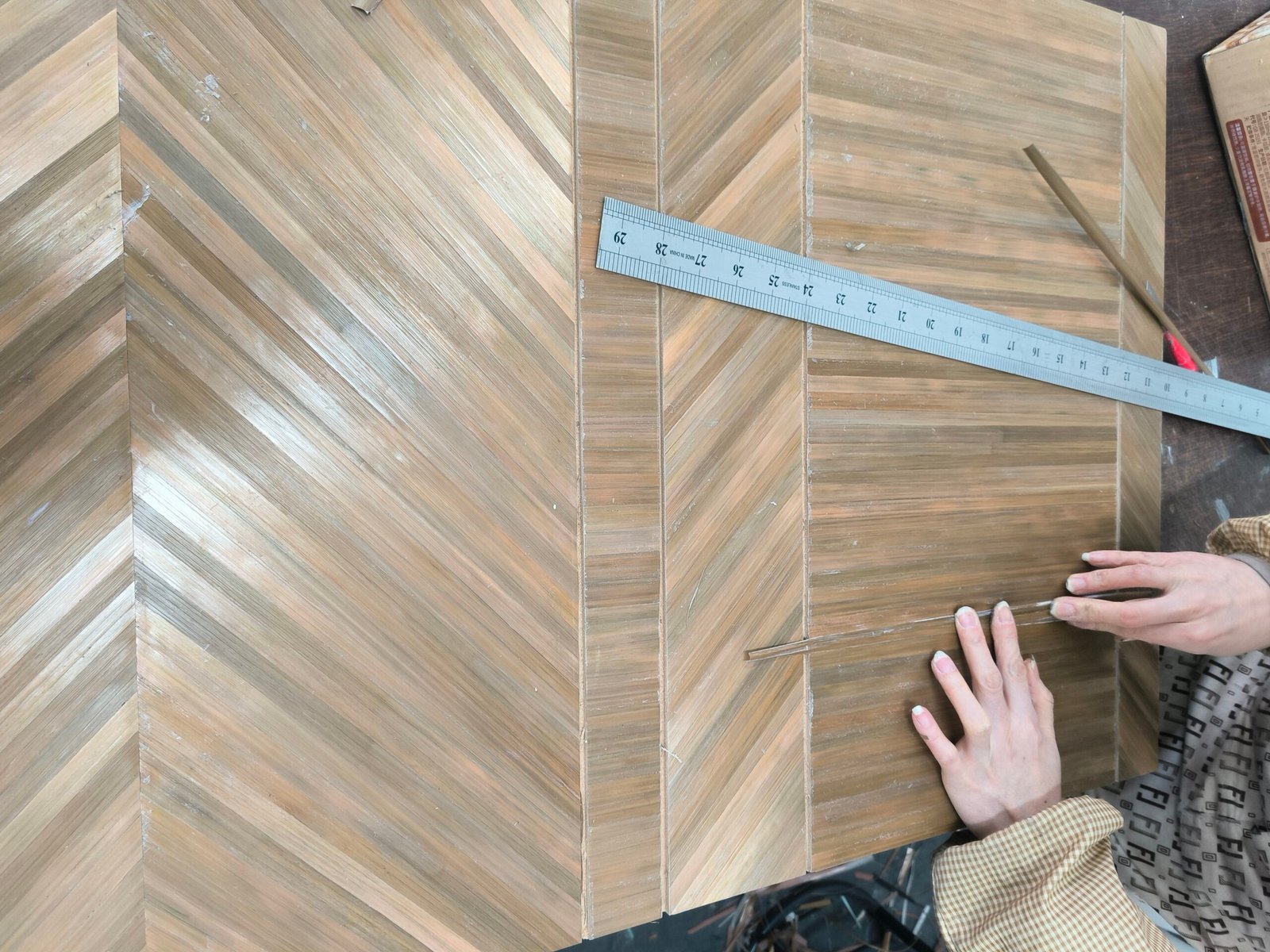
For B2B buyers, designers, and contractors, good results depend on correct specification before production. In our project experience, most avoidable problems come from incomplete approval of substrate, pattern direction, finish, or panel layout.
1. Define the Application
Start by confirming whether the veneer will be used for cabinet doors, wall panels, furniture components, decorative doors, or custom joinery. Application affects substrate choice, construction method, and finishing requirements.
2. Choose the Right Substrate
For cabinet fronts and machined furniture components, MDF is commonly selected for flatness and processing consistency. For larger wall panels and architectural cladding, plywood or composite backing may offer better dimensional stability. For certain lamination or curved component requirements, paper backed veneer construction may be considered.
3. Confirm Pattern Direction and Layout
Pattern orientation strongly affects the final look. For continuous wall installations or matched furniture sets, elevation drawings and panel numbering should be reviewed before production. This is especially important for herringbone, chevron, sunburst, and other directional layouts.
4. Select Finish and Approve Samples
Before bulk production, buyers should confirm finish level, gloss target, protection requirement, and approved sample reference. For high-contact areas such as doors and cabinet fronts, a clear protective coating is usually recommended.
Panel Types and Technical Specifications
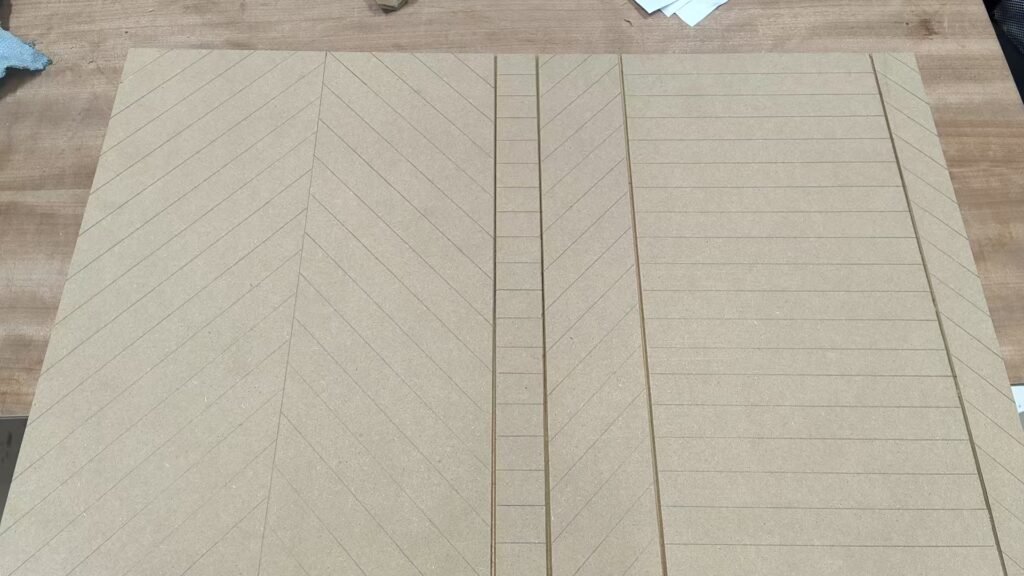
Technical options for straw marquetry veneer panels, including substrate and thickness selection.
When using straw marquetry veneer in interior design, technical specification is as important as aesthetics. The right construction depends on application type, panel size, and installation method.
Common Panel Types
- Natural straw marquetry veneer: emphasizes handcrafted appearance and individual variation
- Engineered decorative panels: designed for better stability and easier integration into wall panel or furniture production
- Paper backed decorative veneer: useful for certain lamination processes or flexible applications
These categories are often considered alongside standard veneer industry options such as natural wood veneer, engineered veneer, and paper backed veneer.
Recommended Substrate by Application
| Application | Recommended Substrate | Typical Finished Thickness | Notes |
|---|---|---|---|
| Cabinet doors and drawer fronts | MDF | Typically 18 mm construction or project-based | Good flatness and machining performance |
| Furniture panels and sideboards | MDF or plywood | Depends on design and structure | Choose based on machining and stability needs |
| Wall panels | Plywood, fire-rated board, or composite panel | Customized by installation system | Stable backing is important for larger sizes |
| Decorative doors and partitions | Reinforced stable substrate | Project-based | Protective coating and structural planning are essential |
Typical Technical Parameters
- Surface thickness: usually thin decorative construction, depending on process and finishing
- Finished panel thickness: commonly 3 mm, 5 mm, 9 mm, 12 mm, or customized
- Panel sizes: 2440 x 1220 mm, 3050 x 1220 mm, or custom-cut dimensions
- Substrates: MDF, plywood, fire-rated board, composite panel
- Grade: based on pattern consistency, joint neatness, color harmony, and finish quality
- MOQ: depends on pattern, substrate, and customization level
- Lead time: should be confirmed after sample approval and order details
Finish Options
- Matte finish: softer visual effect, suitable for calm luxury interiors
- Semi-gloss finish: balances protection and natural sheen
- Gloss finish: stronger reflection, used for more dramatic decorative effect
- Clear protective coating: recommended for doors, cabinet fronts, and higher-contact surfaces
Important Veneer Terms
Buyers should understand basic surface terminology such as grain, cut, and grade. In straw marquetry, grain refers to directional visual lines created by the arranged straw. Cut refers to pattern arrangement such as linear, chevron, or sunburst. Grade relates to appearance consistency and quality acceptance standard.
Need substrate recommendations, panel sizes, or finish options for your project? Contact us for technical sheets, sample support, and project-based specification advice.
Common Mistakes to Avoid
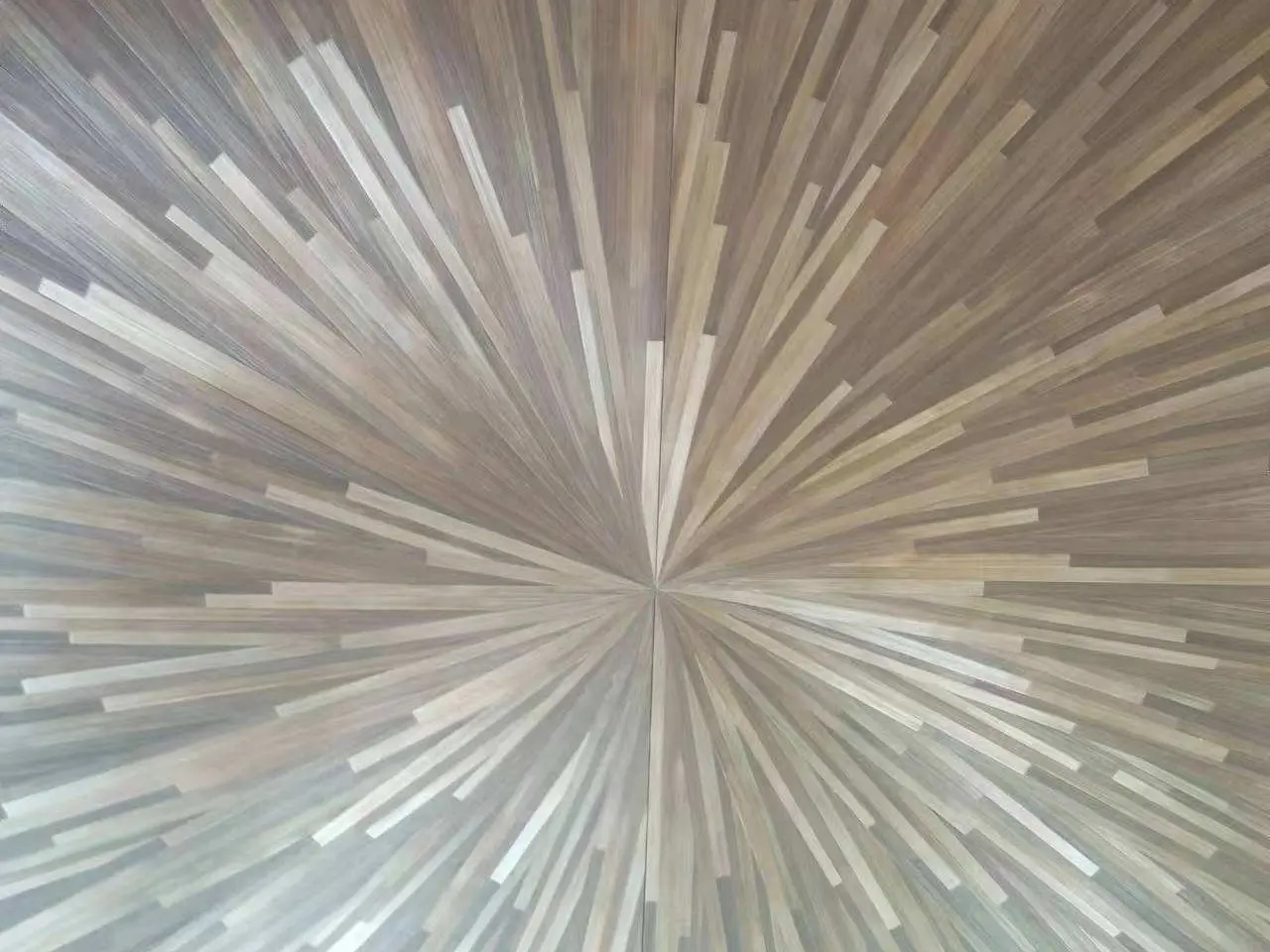
When specifying straw marquetry veneer for interiors, the following issues can lead to avoidable delays or quality problems:
- Ignoring lighting tests: the material changes under different lighting conditions, so sample evaluation on site is important
- No pattern direction approval: directional layouts should be confirmed before production
- Using the wrong substrate: different applications require different backing construction
- Skipping protective finish selection: high-contact surfaces need better surface protection
- No panel numbering or layout plan: especially risky for large wall panel installations and matched sets
Design Tips for Commercial and Residential Projects
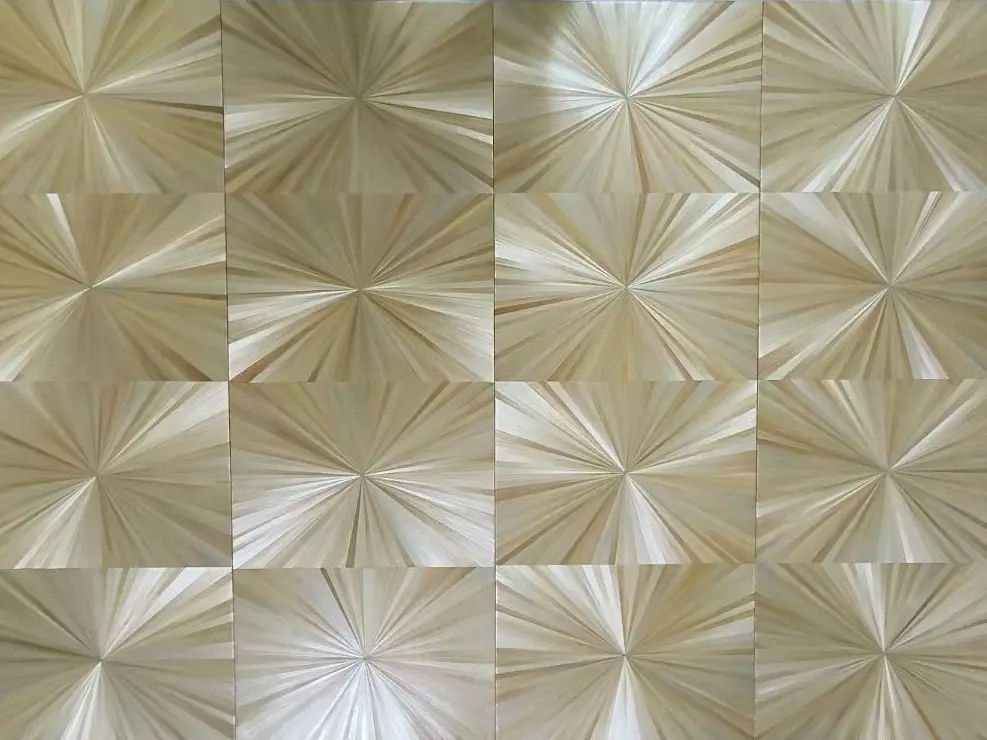
Straw marquetry veneer for luxury hospitality and residential interior applications.
For commercial interiors, straw marquetry veneer is most effective when used with a clear design hierarchy. In hotel projects, it can elevate reception desks, suite headboards, minibar cabinetry, and decorative wall sections. In retail spaces, it adds exclusivity to display furniture and brand-focused feature walls. In premium residential projects, it is often selected for dressing rooms, libraries, custom wardrobes, and statement cabinetry.
A practical design approach is to use straw marquetry on high-visibility zones and use oak, walnut, teak, painted veneer, or neutral lacquer surfaces for supporting areas. This improves budget control and maintains a high-end material balance.
It is also important to design around the panel layout. Because pattern direction affects the final look, designers should review elevation drawings and panel joint planning before production. This is especially important for continuous wall panel installations and matched furniture collections.
Project Example
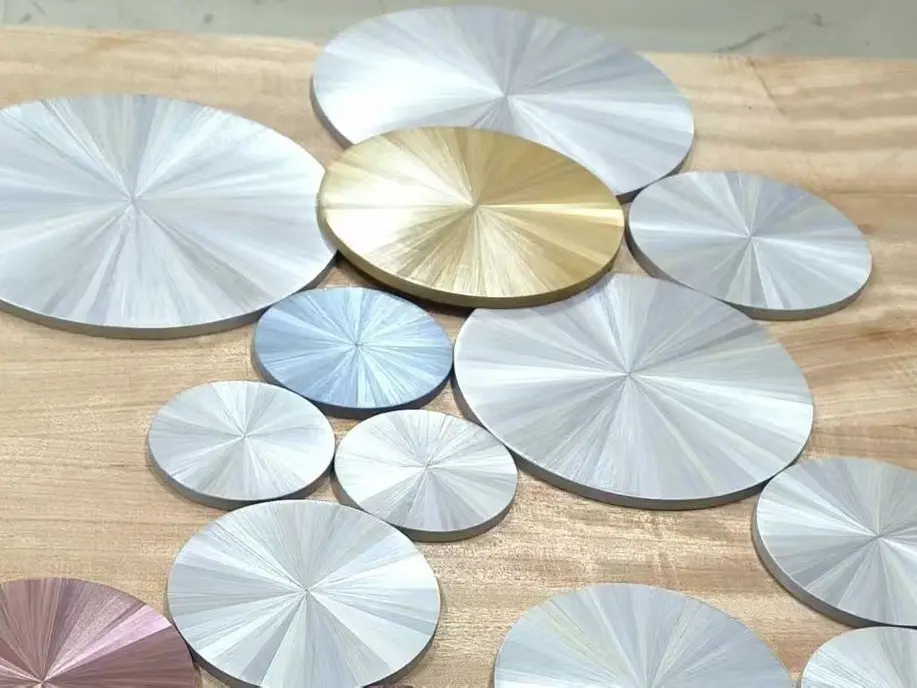
Example application: boutique hotel suite feature wall and minibar cabinetry
Material concept: straw marquetry veneer feature surface paired with walnut veneer framing and brass details
Suggested construction: engineered backing for wall panels and MDF-based construction for cabinet fronts
Key challenge: maintaining visual consistency across multiple panels under warm hotel lighting
Recommended solution: confirm sample approval under project lighting conditions, finalize panel orientation drawings, and use matched production control for visible areas
This type of project illustrates why straw marquetry veneer is usually best positioned as a focal luxury material rather than a full-space commodity finish.
Straw Marquetry Veneer vs Wood Veneer
Comparison of straw marquetry veneer and wood veneer for premium interior design applications.
Both straw marquetry veneer and wood veneer are premium decorative surfaces, but they serve different design goals.
| Factor | Straw Marquetry Veneer | Wood Veneer |
|---|---|---|
| Visual effect | Reflective, handcrafted, directional | Natural timber grain and figure |
| Design role | Feature material | Base or feature material |
| Customization | Pattern-driven and highly bespoke | Species, cut, and veneer matching options |
| Project suitability | Luxury furniture, statement panels, decorative surfaces | Broad furniture and architectural applications |
| Commercial positioning | Specialized and premium | Wider availability across price levels |
Wood veneer is better suited for projects that require natural timber character, standard grain selection, and wider volume availability. It is widely offered in natural, engineered, and paper backed veneer forms. Common species include oak, walnut, teak, ash, maple, and ebony.
Straw marquetry veneer is more artistic and specialized. It offers stronger visual movement and a handcrafted identity, making it ideal for feature applications and luxury interiors. However, because it is more labor-intensive, it is usually positioned for statement furniture and decorative panels rather than broad commodity use.
For many interior projects, the best solution is not choosing one over the other, but combining both. Wood veneer can provide the architectural base, while straw marquetry veneer adds focal detail.
How to Source Custom Straw Marquetry Veneer Panels
Export-ready packaging for custom straw marquetry veneer panels and interior project samples.
If you are sourcing straw marquetry veneer for interior design projects, it is best to work with a supplier or manufacturer that can support both design development and production execution. This is especially important for furniture factories, contractors, wholesalers, and overseas buyers managing custom requirements.
Before placing an order, confirm the following:
- Application type: furniture, wall panel, cabinet door, or door skin
- Required substrate and finished panel thickness
- Pattern direction and matching requirement
- Surface finish level and protection standard
- MOQ for standard and custom orders
- Sample availability and approval process
- Lead time, export packing, and shipping terms
Custom Capabilities to Check
- Custom pattern layout and directional matching
- Substrate selection by application
- Cut-to-size panels or component-based supply
- Matched furniture and wall panel sets
- OEM finishing options
- Export packaging support for overseas projects
Sample to Production Process
- Send drawings, material references, or application details
- Confirm pattern, substrate, size, and finish direction
- Develop samples or approval boards
- Approve final sample and production standard
- Start batch production
- Inspect surface, pattern, and finishing quality
- Pack and ship according to export or project requirements
A reliable supplier should also be able to offer OEM support, sample boards, custom veneer layouts, and production guidance based on the final application. This helps reduce risk and ensures the approved design can be reproduced consistently in volume.
FAQ
What is straw marquetry veneer used for in interior design?
It is used for luxury furniture, decorative wall panels, cabinet doors, partitions, and bespoke joinery where a handcrafted premium surface is needed.
Can straw marquetry veneer be applied to MDF or plywood?
Yes. MDF and plywood are common substrates for furniture panels, wall cladding, and decorative doors, depending on the project requirements.
Is straw marquetry veneer suitable for hotel and retail interiors?
Yes. It is often used in hotel suites, reception desks, feature walls, boutique retail spaces, and other premium commercial interiors.
How does straw marquetry veneer compare with wood veneer?
Wood veneer offers natural timber grain and broader volume use, while straw marquetry veneer provides a more reflective, handcrafted, and decorative effect.
How can I source custom straw marquetry veneer panels?
Work with a manufacturer that can support pattern customization, substrate selection, sample approval, OEM production, and export packaging for your project.
Why Buyers Work With Us
Manufacturing and Project Support
- OEM support for custom patterns, sizes, and panel construction
- Material recommendations based on furniture and interior applications
- Sample development before mass production
- Project-based production support for wall panels, doors, and cabinetry
- Export packaging for international shipment
Trust Signals Buyers Usually Need
| Capability | What It Means for Buyers |
|---|---|
| Sample development | Helps confirm pattern, grain direction, cut layout, and finish before mass production |
| Substrate matching | Supports the right construction for furniture, wall panel, and door applications |
| Project-based production | Improves consistency for matched sets and larger interior programs |
| Export packaging | Reduces damage risk during international shipment |
| Technical communication | Helps buyers confirm thickness, size, grade, and finish requirements earlier |
For many B2B buyers, a supplier is not selected only because of design appeal. The real decision often depends on whether samples can be approved efficiently, whether the panel structure is suitable for the final application, and whether production can be controlled consistently from first sample to shipment. That is why our support focuses on both decorative design and execution details.
Recommended RFQ Information
Looking for a reliable straw marquetry veneer supplier?Send us your drawings or application details to get free samples, MOQ information, lead time, and a quotation for custom furniture panels, wall panels, cabinet doors, and decorative interior projects.