As a decorative veneer manufacturer and supplier, we are seeing stronger demand from furniture factories, interior contractors, wholesalers, architects, and project buyers who want surface materials that combine craftsmanship, luxury appearance, and practical project value. Based on recent sample requests and project development discussions, straw marquetry veneer is becoming a preferred feature material for custom furniture, boutique hospitality interiors, branded residential spaces, and decorative wall panel systems.
Unlike mass-market laminates or printed decorative boards, straw marquetry veneer offers a handcrafted surface with natural variation, directional texture, and a soft reflective effect under light. This makes it especially attractive for designers who want a material that feels more artistic than standard veneer substitutes, while still being suitable for commercial specification when paired with the right substrate, finish, and production control.
For B2B buyers, current trends are not only about appearance. The real questions are which colors are being requested most often, which patterns are suitable for furniture or wall panels, how straw marquetry works with wood veneer, and how to turn a trend concept into a manufacturable panel solution. In this article, we explore the most relevant straw marquetry veneer trends in colors, patterns, and interior uses, with practical guidance for project sourcing and customization.
Table of Contents
- What Is Driving Straw Marquetry Veneer Trends?
- Popular Straw Marquetry Veneer Colors in 2025
- Trending Patterns and Surface Effects
- Most Requested Trend Directions by Application
- Interior Uses for Straw Marquetry Veneer
- How Designers Combine Straw Marquetry with Wood Veneer
- Technical and Custom Considerations
- Trend Directions That Work Best for Production
- Straw Marquetry Veneer vs Wood Veneer in Trend-Driven Design
- What to Send for a Quotation
- FAQ
What Is Driving Straw Marquetry Veneer Trends?
Current straw marquetry veneer trends are being shaped by several connected changes in the interior materials market.
First, there is growing demand for natural and tactile surfaces. In premium interior design, many buyers are moving away from flat and overly uniform decorative materials. They want surfaces with movement, light response, and visible hand-crafted character. Straw marquetry veneer fits this demand because its arranged fibers create a directional grain effect and a refined sheen that changes depending on viewing angle and lighting conditions.
Second, interior design is becoming more customized. Hotels, villas, luxury apartments, branded retail spaces, and bespoke furniture collections increasingly require materials that can be adjusted by color direction, pattern layout, panel size, and substrate. This creates demand not only for standard decorative sheets, but for project-based panel development.
Third, designers are using more mixed-material compositions. Instead of finishing a whole space with one dominant decorative surface, they are combining wood veneer, lacquer, metal, stone, and artisanal materials in a more layered way. Straw marquetry veneer works well in this context because it performs best as a focal material rather than a commodity finish.
From our manufacturing and sampling experience, another important factor is visual differentiation. Buyers want feature materials that help a project stand out, especially in high-value hospitality and custom furniture work. Straw marquetry veneer offers a stronger signature than standard printed boards while still being compatible with engineered panel construction.
Popular Straw Marquetry Veneer Colors in 2025
Color direction is one of the clearest indicators of how straw marquetry veneer is evolving in the market. While natural golden tones remain the most recognizable style, current demand is more diverse.
Natural Golden and Honey Tones
Natural golden and honey shades remain the most commercially accepted option. These colors emphasize the organic character of straw and create a warm luxury effect. They are especially popular in residential interiors, boutique hotels, and custom cabinetry where designers want elegance without excessive contrast.
These tones are commonly paired with walnut veneer, brushed brass, cream textiles, beige stone, and warm lighting. For many buyers, natural tones are still the safest starting point because they suit a wide range of interior styles and remain close to the original handcrafted identity of the material.
Smoked and Darker Finishes
Smoked tones and darker brown variations are increasingly requested for contemporary hospitality and premium residential projects. Compared with traditional golden straw, these finishes create a more architectural and dramatic mood. They are often selected for darker feature walls, statement cabinet fronts, upscale lounge furniture, and decorative doors.
Designers frequently combine smoked straw marquetry with dark oak, blackened metal, bronze details, and matte lacquer. These combinations help the material feel more modern and less traditional.
Soft Neutral and Greyed Tones
In more restrained interior schemes, there is also growing interest in softer neutral directions. Greyed beige, muted amber, and less saturated tones can make straw marquetry feel more contemporary and easier to integrate into minimalist spaces. These shades are especially relevant for buyers who want texture and craftsmanship without a strong golden color statement.
Dyed and Project-Specific Color Directions
Custom dyed straw marquetry veneer is becoming more relevant in branded or highly tailored projects. Some buyers request deeper amber tones, richer contrast, or color adjustments to match surrounding finishes. In these cases, sample approval becomes essential because color in straw marquetry is affected by both the material itself and the final topcoat.
For B2B orders, color trend interest should always be balanced with manufacturability and consistency. The more customized the tone, the more important it is to confirm sample standards before production.
Trending Patterns and Surface Effects
Pattern is just as important as color in straw marquetry veneer. While the material itself is visually distinctive, the final effect depends heavily on how the straw is arranged.
Linear Grain Patterns
Linear layouts remain one of the most requested options. They create a clean, elegant look and highlight the natural reflective quality of the surface. In furniture and wall panel applications, linear grain patterns work well because they are visually refined and relatively versatile.
This pattern direction is often preferred for larger panel areas, cabinet fronts, and vertical surfaces where designers want subtle movement rather than strong decoration.
Chevron and Herringbone Effects
Chevron and herringbone-inspired arrangements are popular for buyers who want more visible geometry. These patterns introduce rhythm and structure, making them suitable for decorative furniture, wardrobe panels, feature cabinetry, and statement wall inserts.
Because these layouts rely more heavily on pattern alignment, they require stricter control during sample development and production approval.
Sunburst and Radial Layouts
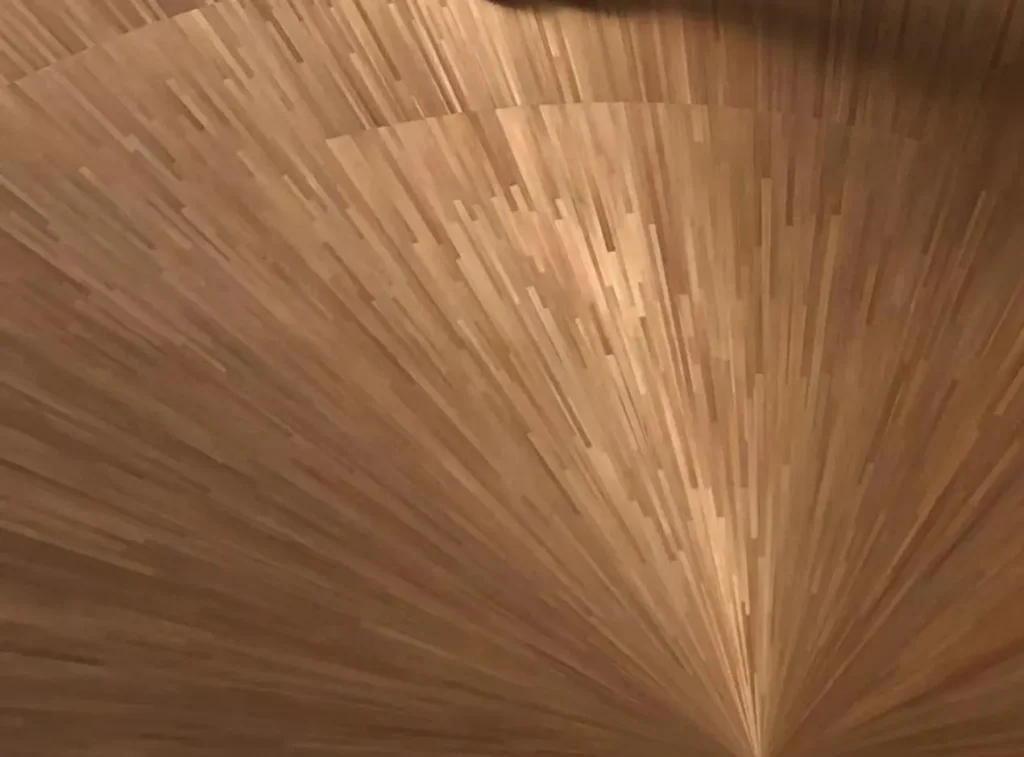
Sunburst and radial arrangements are used in more expressive luxury applications. These patterns are often seen in bespoke furniture fronts, feature doors, premium hospitality joinery, and designer wall compositions. They offer strong visual impact and communicate a higher level of craftsmanship.
However, they are also more labor-sensitive and usually better suited for feature areas than large-scale standard coverage.
Geometric and Custom Layouts
Some projects request fully custom geometric layouts to match a specific brand language or interior concept. These are common in bespoke retail interiors, luxury clubs, decorative panels, and signature furniture pieces. In such cases, pattern design should be confirmed through drawings, mockups, or approval boards before production begins.
From a technical standpoint, pattern trend selection should always be reviewed alongside grain direction, cut layout, joint neatness, and visible-face consistency.
Most Requested Trend Directions by Application
The most popular trend directions often vary by end use. The table below reflects common project preferences seen in current B2B inquiries and sampling discussions.
| Application | Popular Color Direction | Preferred Pattern | Typical Pairing Material |
|---|---|---|---|
| Cabinet doors | Natural honey, smoked brown | Linear, chevron | Walnut veneer, matte lacquer |
| Sideboards and custom furniture | Golden, amber, darker smoked tones | Linear, sunburst, geometric inserts | Oak, walnut, brass |
| Wall panels | Natural gold, muted neutral, smoked tones | Linear, large directional layout | Engineered oak veneer, lacquer, metal trim |
| Decorative doors | Smoked, darker amber, custom tone | Chevron, geometric, matched directional pattern | Dark wood veneer, bronze hardware |
| Hospitality joinery | Honey, rich amber, warm dark tones | Linear, herringbone, custom layout | Walnut, teak, brass, upholstery |
| Retail display furniture | Custom dyed, contrast-driven tones | Geometric, sunburst, statement inserts | Lacquer, metal, engineered veneer |
This kind of application-based planning is useful because a trend that looks attractive on a sample board may not be the best option for every manufacturing context.
Interior Uses for Straw Marquetry Veneer
As trend interest grows, the range of interior uses is also expanding. Still, straw marquetry veneer works best when used selectively and strategically.
Furniture
Custom furniture remains one of the strongest application categories. Straw marquetry veneer is frequently used on sideboards, wardrobes, cabinet fronts, bedside tables, desks, dressers, drawer faces, and reception furniture. In many cases, it is framed by walnut, oak, or lacquered borders to improve visual definition and edge durability.
For furniture makers, the appeal lies in combining artisanal luxury with panel-based construction.
Wall Panels
Decorative wall panel systems are another major growth area. In hotel suites, lounges, villas, and premium apartments, straw marquetry veneer adds texture and richness without requiring heavy ornament. Linear layouts are especially suitable for wall applications because they create calm visual movement over larger surfaces.
For large panels, engineered backing and installation planning are important to maintain flatness and layout consistency.
Doors and Decorative Joinery
Decorative doors, sliding partitions, wardrobe inserts, and custom joinery panels are increasingly using straw marquetry veneer as a feature surface. In these uses, the material is typically applied to a stable substrate and protected with a suitable finish. Because these elements receive more touch and movement than wall panels, finish specification is critical.
Hospitality and Branded Interiors
In hospitality interiors, the material is often used to create high-value touchpoints such as headboards, minibar cabinetry, decorative wall sections, suite entrances, and reception details. In branded commercial interiors, it can help create a stronger identity through material uniqueness.
In most cases, the material performs best as a focal accent rather than an all-over finish. This helps preserve its premium character and improves budget control.
How Designers Combine Straw Marquetry with Wood Veneer
A major trend in current interior design is combining straw marquetry veneer with traditional wood veneer rather than using it alone. This layered approach creates a more balanced result.
Oak, Walnut, and Teak Pairings
Oak veneer provides a lighter and more contemporary architectural base. Walnut veneer is one of the most effective pairings because it adds warmth and contrast while framing the brighter straw surface. Teak works especially well with golden and amber directions and is often used in refined hospitality and residential spaces.
For related material options, buyers often compare wood veneer panels, engineered veneer, and paper backed veneer depending on the application.
Natural, Engineered, and Paper Backed Surface Strategies
In project planning, designers may use engineered veneer for larger field areas and straw marquetry veneer for focal inserts. This is particularly useful in wall systems, furniture programs, and interior fit-out work where cost control and visual hierarchy both matter.
For curved or flexible applications, paper backed veneer may also be considered in combination with decorative surface planning.
Material Hierarchy in Design
Wood veneer offers familiarity, scale, and architectural continuity. Straw marquetry veneer introduces craft, texture, and signature detail. The most successful results often come from letting wood veneer define the base language of the project while straw marquetry serves as the accent material.
This strategy also helps B2B buyers manage price positioning and production complexity more effectively.
Technical and Custom Considerations
Trend-driven materials still need practical specification support. For commercial use, buyers should evaluate more than visual effect.
Typical Technical Parameters
| Item | Typical Option |
|---|---|
| Decorative surface type | Natural straw marquetry veneer |
| Common substrates | MDF, plywood, fire-rated board, composite panel |
| Common finished thickness | 3 mm, 5 mm, 9 mm, 12 mm, or custom |
| Standard panel sizes | 2440 x 1220 mm, 3050 x 1220 mm, or custom |
| Finish options | Matte, semi-gloss, gloss, clear protective coating |
| Supply format | Decorative panel, laminated panel, cut-to-size component |
| Grade factors | Pattern consistency, joint neatness, color harmony, finish quality |
OEM and Custom Veneer Solutions
For furniture factories, contractors, and wholesalers, OEM capability is essential. A supplier should be able to support:
- Custom color development
- Pattern direction control
- Substrate selection by application
- Panel size customization
- Finish selection
- Matched production for visible areas
- Export packaging for international orders
Sampling should include visual approval, finish confirmation, and pattern review under real project lighting. Since straw marquetry is a detail-sensitive handcrafted surface, sample-to-production control is critical.
Trend Directions That Work Best for Production
Not every attractive trend direction is equally practical for manufacturing. This is an important point for B2B buyers.
Easier to Standardize
The following trend directions are generally easier to develop for repeat production:
- Natural golden or honey tones
- Linear grain layouts
- Standard furniture panel sizes
- Simple framed insert designs
- Flat applications on stable substrates
These options usually offer a better balance between premium appearance, manageable lead time, and consistent quality.
More Complex for Project Production
The following directions often require more planning, sampling, and production control:
- Highly customized dyed colors
- Sunburst and radial layouts
- Large matched wall panel sets
- Multi-panel pattern continuation
- Decorative doors with strict visible-face consistency
These trend directions are possible, but buyers should expect longer sample approval cycles and more detailed technical coordination.
Trend Is Not the Same as Mass Production
A visually striking pattern may perform well in a showroom sample but become more difficult to control at scale. For this reason, project buyers should evaluate trend choices not only by design impact, but also by repeatability, quality risk, and installation conditions.
This is one of the main reasons why supplier sampling and approval boards are so important in straw marquetry veneer projects.
Straw Marquetry Veneer vs Wood Veneer in Trend-Driven Design
In trend-driven interiors, straw marquetry veneer and wood veneer are not direct substitutes in every application. They solve different design needs.
Wood veneer remains the preferred choice for broad architectural coverage, natural timber character, and scalable production. It is widely available in natural, engineered, and paper backed forms across species such as oak, walnut, teak, ash, maple, and ebony.
Straw marquetry veneer is more specialized. It offers stronger decorative identity, more visible craftsmanship, and greater visual movement under light. It is usually better suited for statement surfaces, feature joinery, luxury furniture, and high-value decorative accents.
For many interior projects, the most effective solution is not choosing one over the other, but combining both. Wood veneer can establish the overall architectural tone, while straw marquetry veneer creates focal points with stronger texture and signature value.
For B2B buyers, this means straw marquetry veneer is often best specified selectively within a broader materials program.
What to Send for a Quotation
To speed up sampling and quotation, buyers should send the following information:
- Application type: furniture, wall panel, cabinet door, decorative door, or joinery
- Preferred color direction: natural, smoked, neutral, dyed, or reference sample
- Pattern style: linear, chevron, herringbone, sunburst, or custom
- Required panel size or drawings
- Preferred substrate
- Quantity or project volume
- Finish requirement
- Delivery timeline
- Project location and shipping requirements
Providing these details helps improve quotation accuracy and reduces delays during sample development.
Need Trend-Based Straw Marquetry Veneer Samples?
If you are developing a furniture line, wall panel program, decorative door series, or hospitality project, we can support custom straw marquetry veneer development based on your application.
We can help with:
– Sample boards for trending colors and patterns
– Custom panel sizes and substrate recommendations
– OEM development for furniture and interior projects
– Production planning for matched panel sets
– Export packaging for overseas buyers
Next step: send us your drawings, preferred color direction, pattern reference, quantity, and application details to receive samples, technical advice, MOQ information, lead time, and a quotation.
FAQ
What are the most popular straw marquetry veneer colors?
Natural golden and honey tones remain the most popular, while smoked and darker finishes are growing in demand for luxury hospitality and residential interiors.
Which straw marquetry veneer patterns are trending?
Linear grain patterns are the most widely used, followed by chevron, herringbone, sunburst, and geometric layouts for decorative feature applications.
Where is straw marquetry veneer used in interior design?
It is commonly used for custom furniture, wall panels, cabinet doors, decorative doors, and bespoke joinery in premium commercial and residential interiors.
Can straw marquetry veneer be customized for projects?
Yes. Manufacturers can often provide custom colors, pattern direction, panel sizes, substrate options, and finish requirements for OEM and project-based orders.
How is straw marquetry veneer different from wood veneer?
Wood veneer provides natural timber grain and broader architectural use, while straw marquetry veneer offers a more handcrafted, reflective, and decorative visual effect.
Final Note for B2B Buyers
Straw marquetry veneer trends are moving toward more refined color control, more architectural pattern use, and more selective application in premium interiors. For buyers, the most successful approach is to combine trend awareness with technical planning. A beautiful pattern or color direction has more commercial value when it can be sampled accurately, produced consistently, and integrated into the right panel construction.
If you are sourcing custom straw marquetry veneer for current or upcoming projects, a supplier with OEM capability, sample development support, and project-based production experience will help reduce risk and improve final results.